Start with the damage
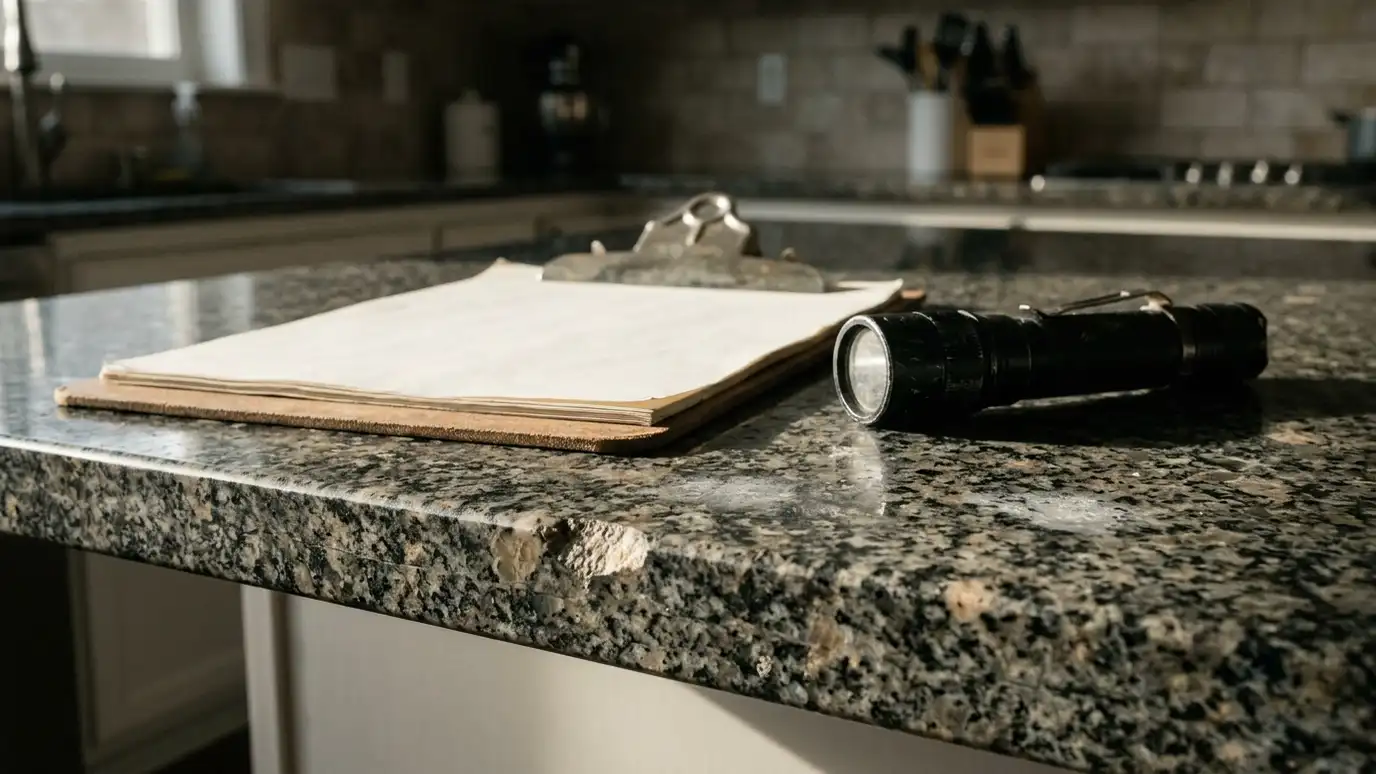
List what you see: chips, cracks, stains, dull spots, loose areas or seams that have opened. Note where each one is and how long it has been there. Photographs help when you talk with a professional.
Most granite problems are repairable. The question is whether repair gives you a result you will be happy with.
Chips and small damage
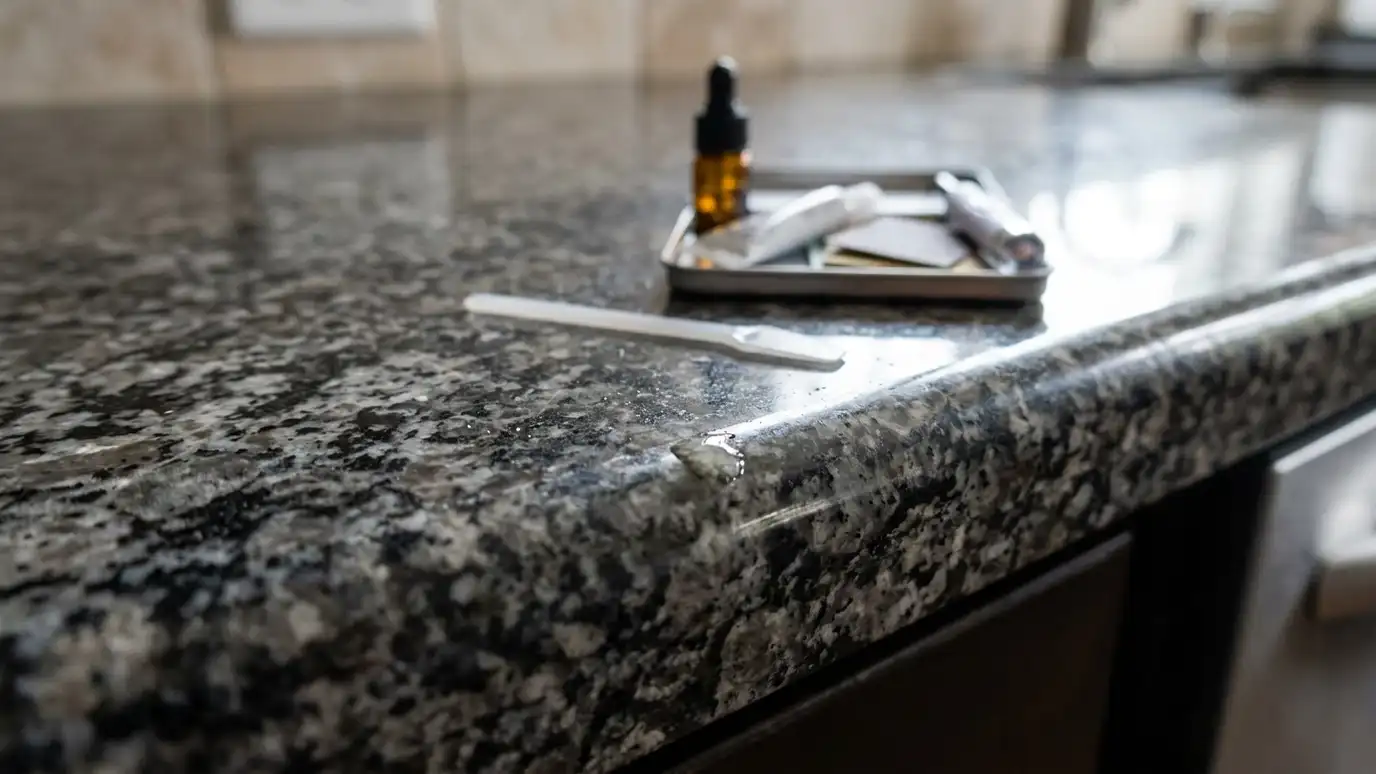
Small chips and nicks are almost always repairable with color-matched filler and polishing. Edges and corners are the most common spots. The repair is quick, inexpensive compared to replacement and often hard to see.
Repeated chipping in one spot suggests an edge profile or care issue worth addressing.
Cracks and structural issues
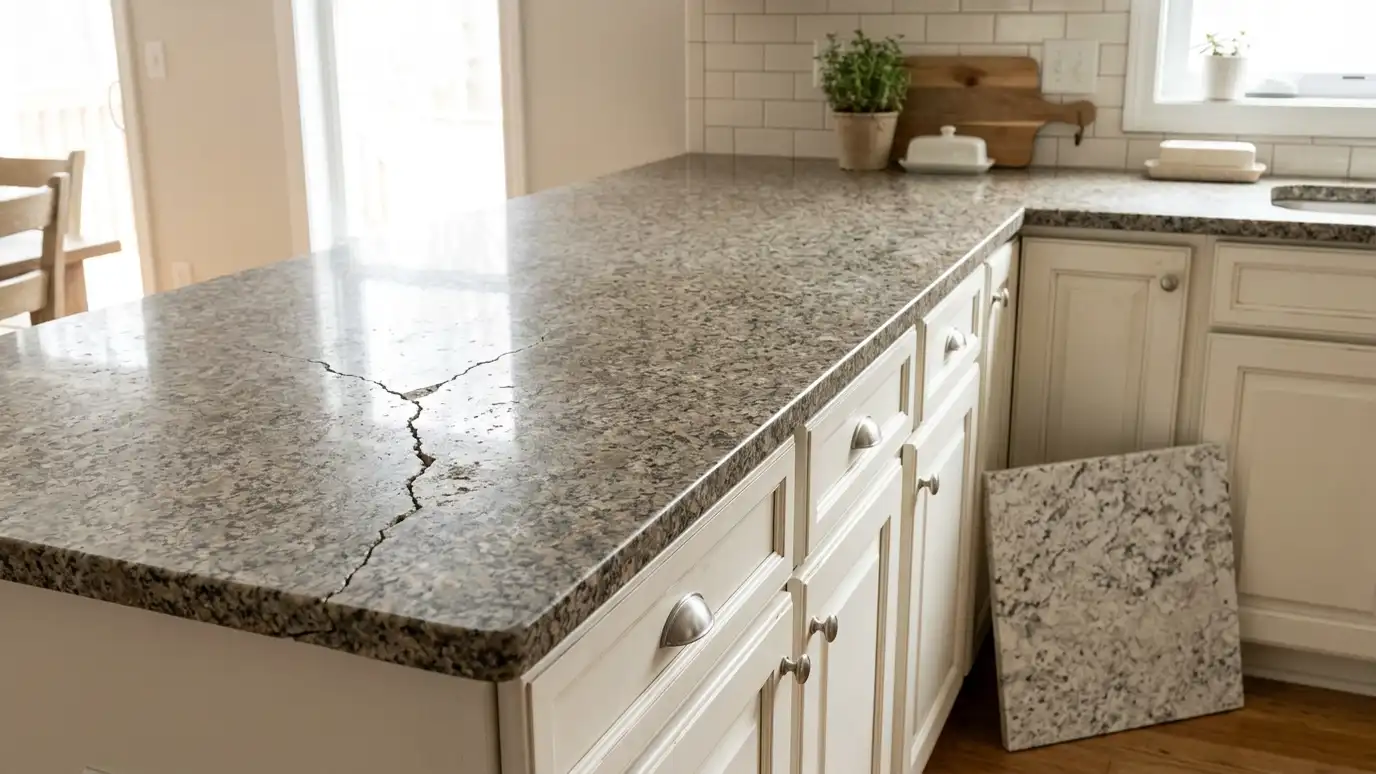
A hairline crack at a sink cutout is often repairable if the stone is stable and supported. Cracks that run through the slab, spread or come with sagging suggest bigger problems. A professional can tell whether a crack is stable and what caused it.
If cabinets are moving or rotting, fix that first, since new stone on a bad base will fail.
Stains, dullness and wear
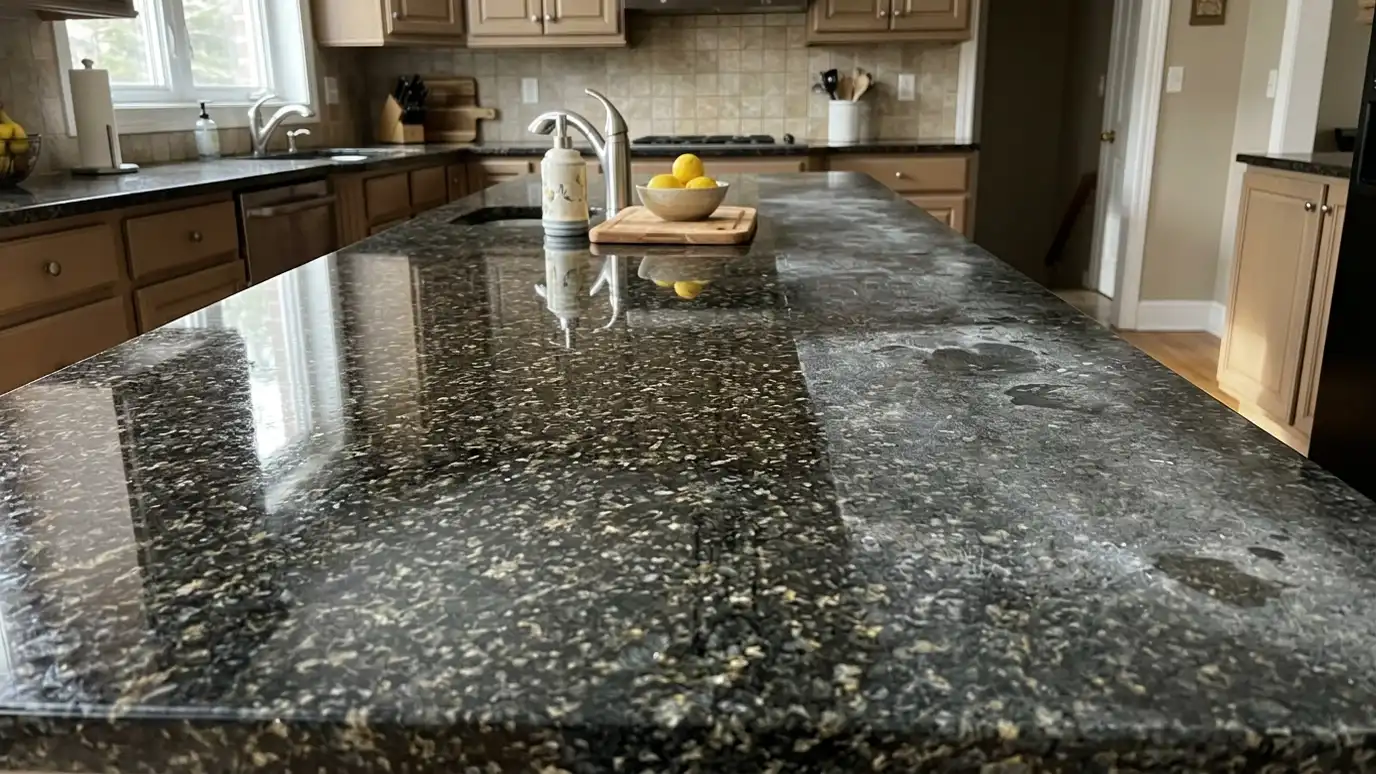
Stains and etching are treatable. Dull, cloudy surfaces can be restored by honing and polishing. If the stone is generally sound, restoration is usually much less expensive than replacement and can make a counter look nearly new.
Replacement is rarely needed for these problems alone.
When replacement makes sense
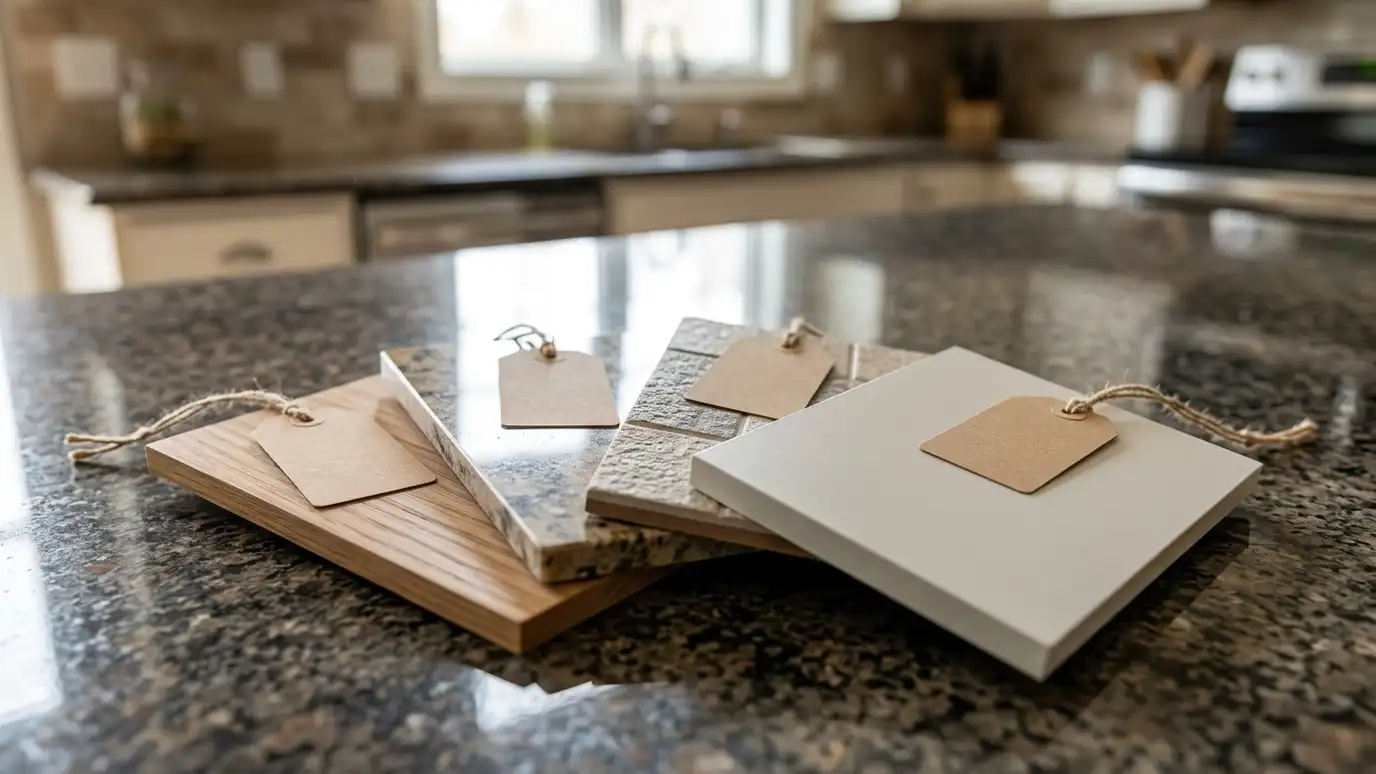
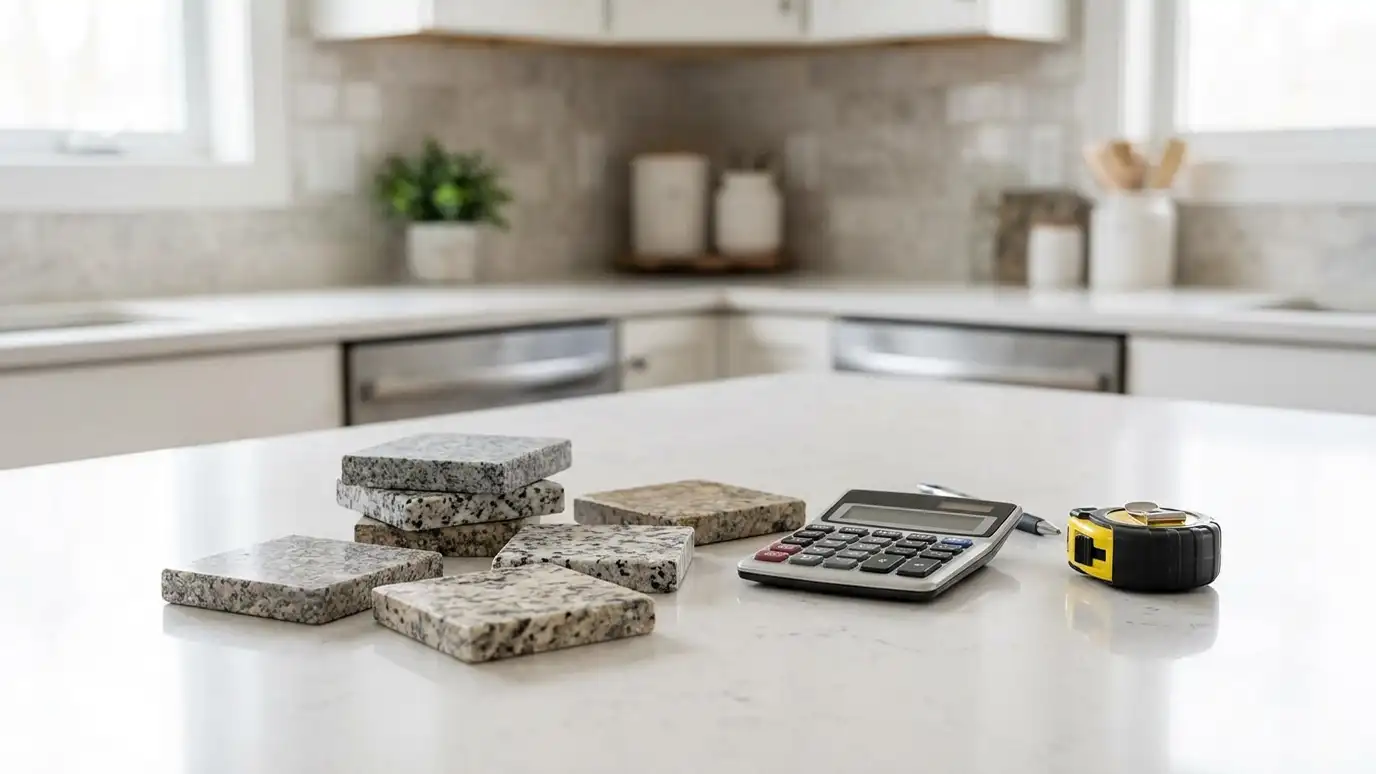
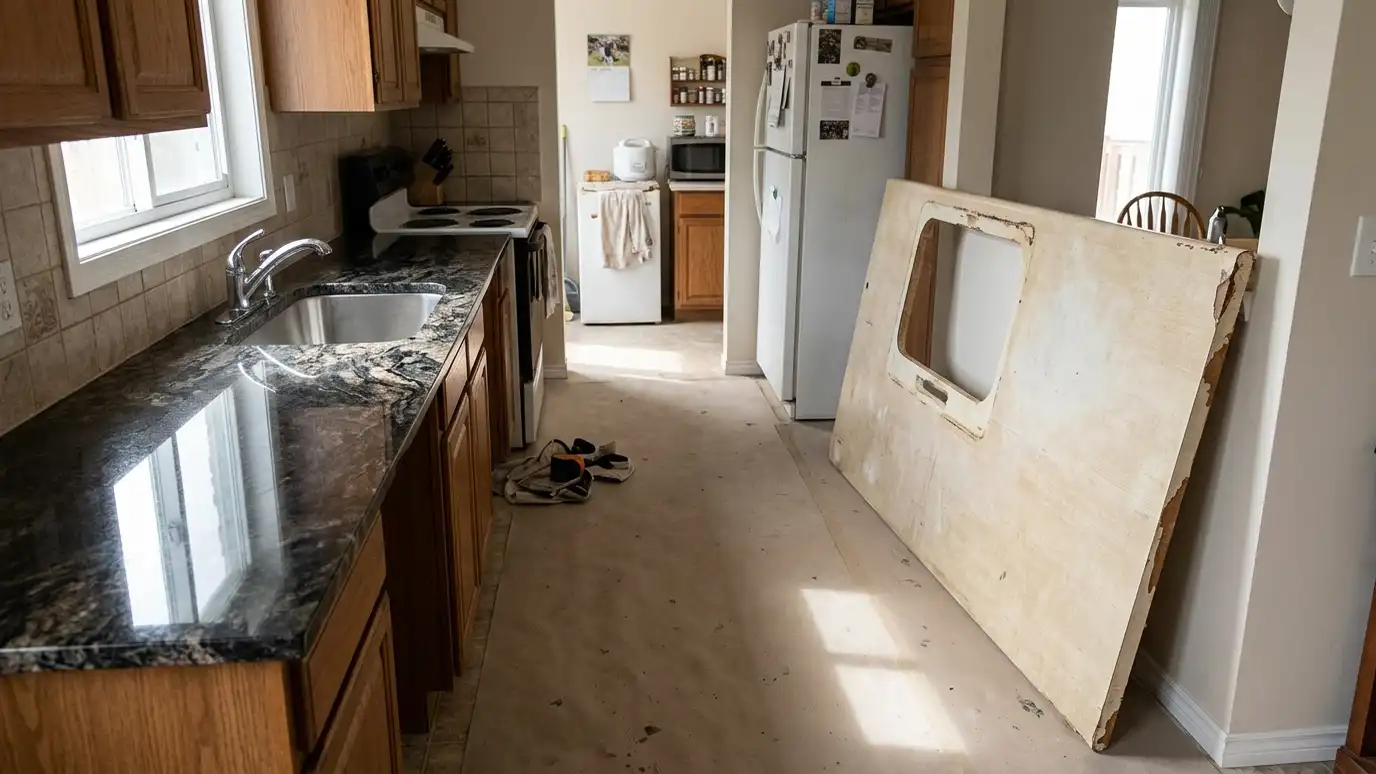
Replacement is the right choice when damage is widespread, when several pieces are cracked, when the stone is thin and fragile or when you want a different color or layout. It also makes sense when the cost of repairs approaches the cost of new tops.
If you dislike the color or the style, repair will not fix that.
The cost question
Compare the cost of repair or restoration to the cost of replacement, including removal, new stone, templating and installation. Ask for both options in writing. Remember that replacement also gives you a chance to change edges, sinks and layout.
A good company will tell you honestly which makes more sense.
Making the decision
Ask yourself how long you plan to stay, what bothers you most and how the rest of the kitchen looks. If the stone is sound and you like it, repair or restore. If it is damaged beyond repair or no longer suits you, replace it.
Either way, a professional assessment gives you clear information.
Repair what is sound, replace what is not and ask for an honest assessment before spending.