Dull or cloudy spots
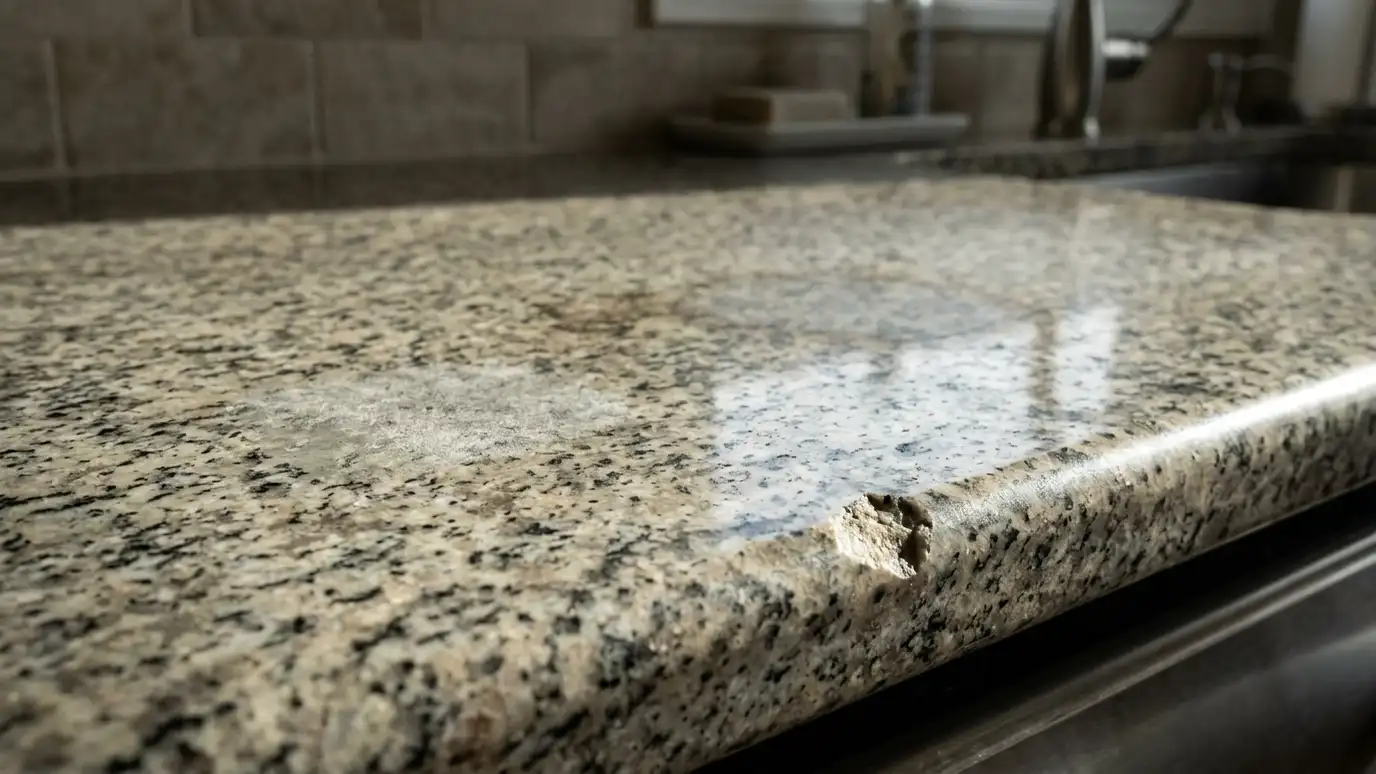
A dull patch near the sink or range is usually an etch from acid or a buildup of residue. Clean with a stone cleaner first. If the dullness remains, it likely needs polishing. Polishing restores the shine.
Avoid acidic cleaners that cause etches.
Stains and dark spots
Dark spots can be moisture, a worn sealer or a stain. Dry the area and perform the water test. If it persists, a poultice can lift the stain. If many areas darken, the stone needs resealing.
See our stain guide for details.
Chips and nicks
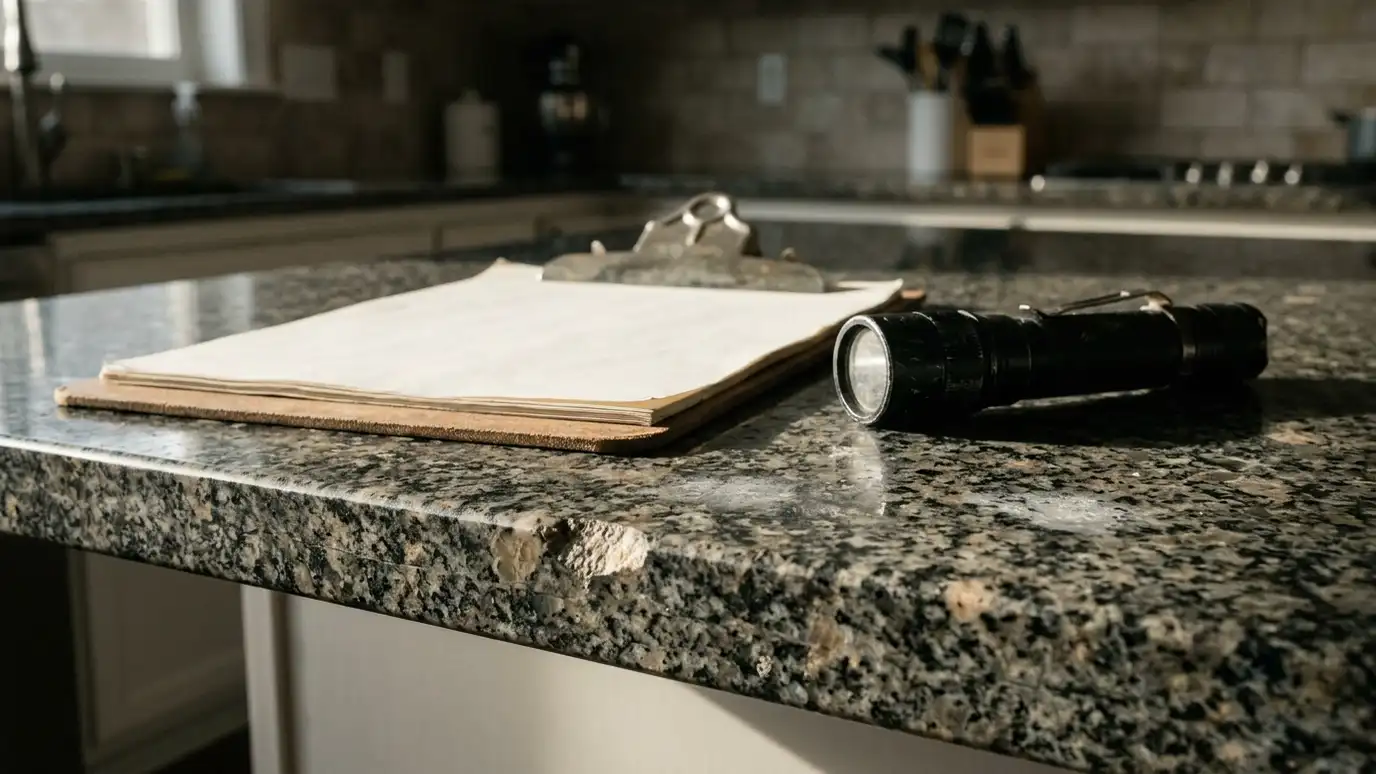
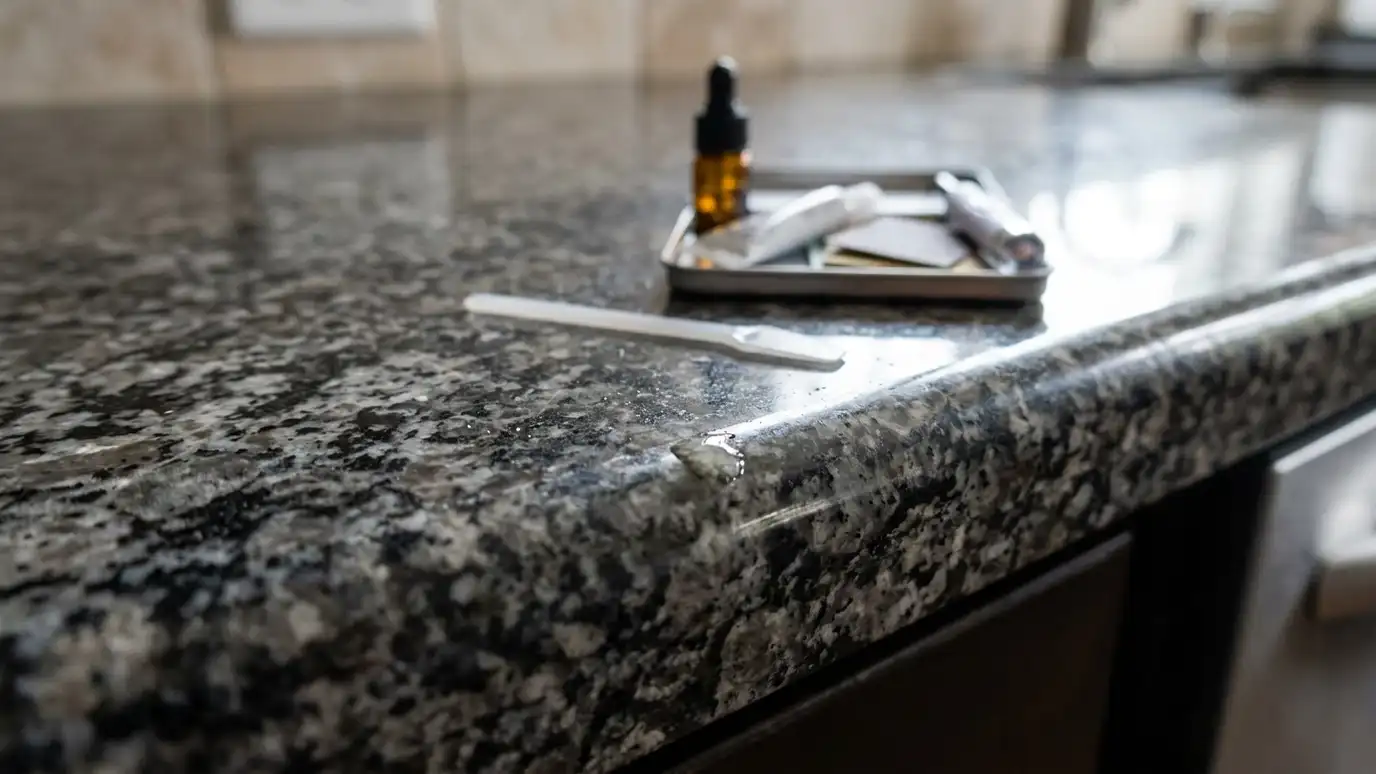
Edges and corners can chip from impacts. Keep the piece if you can and call for a repair. Small chips are filled and polished. Rounded edges chip less than sharp ones.
Avoid hitting the edge with heavy cookware.
Cracks
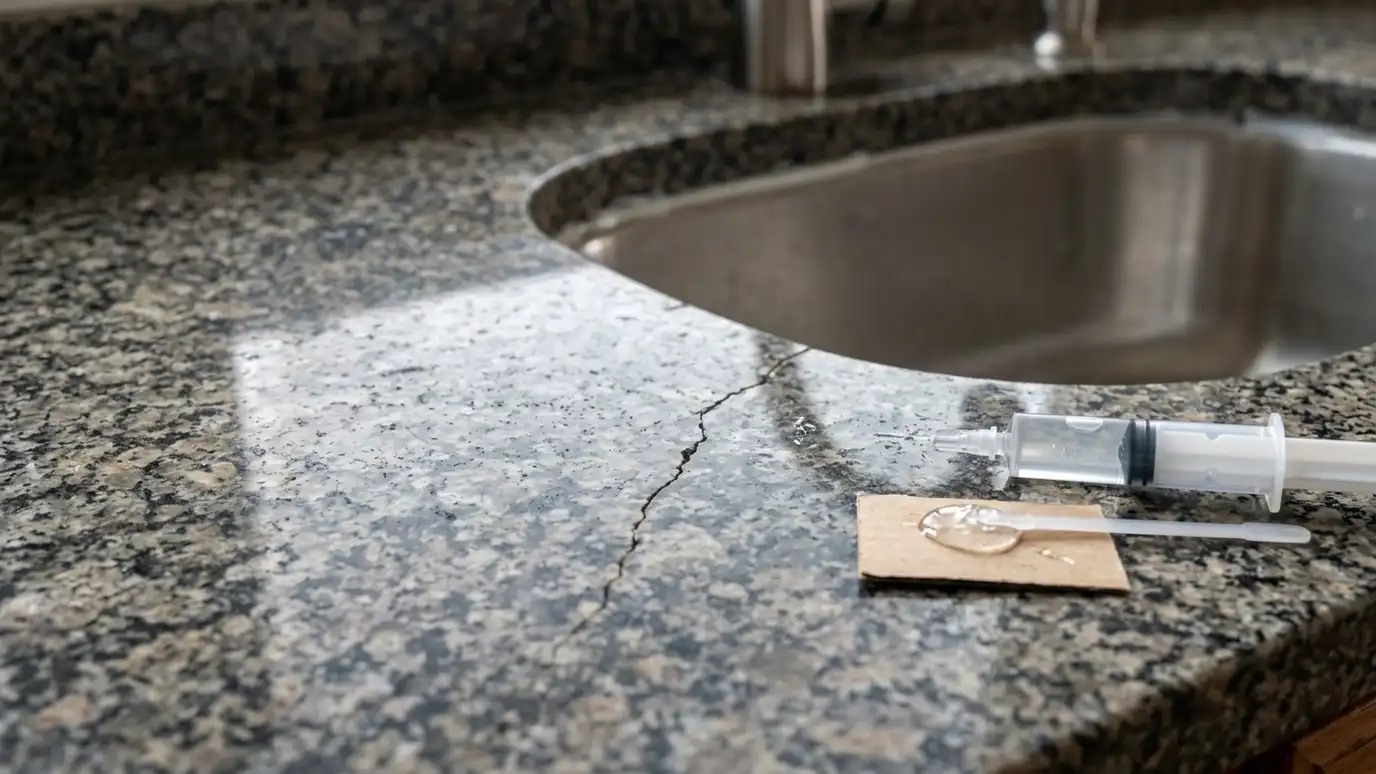
Cracks near sink cutouts and cooktop corners are common. They often indicate weak support or settling cabinets. A professional can diagnose and repair them, and correct the cause.
Do not put weight on a cracked area.
Open or uneven seams
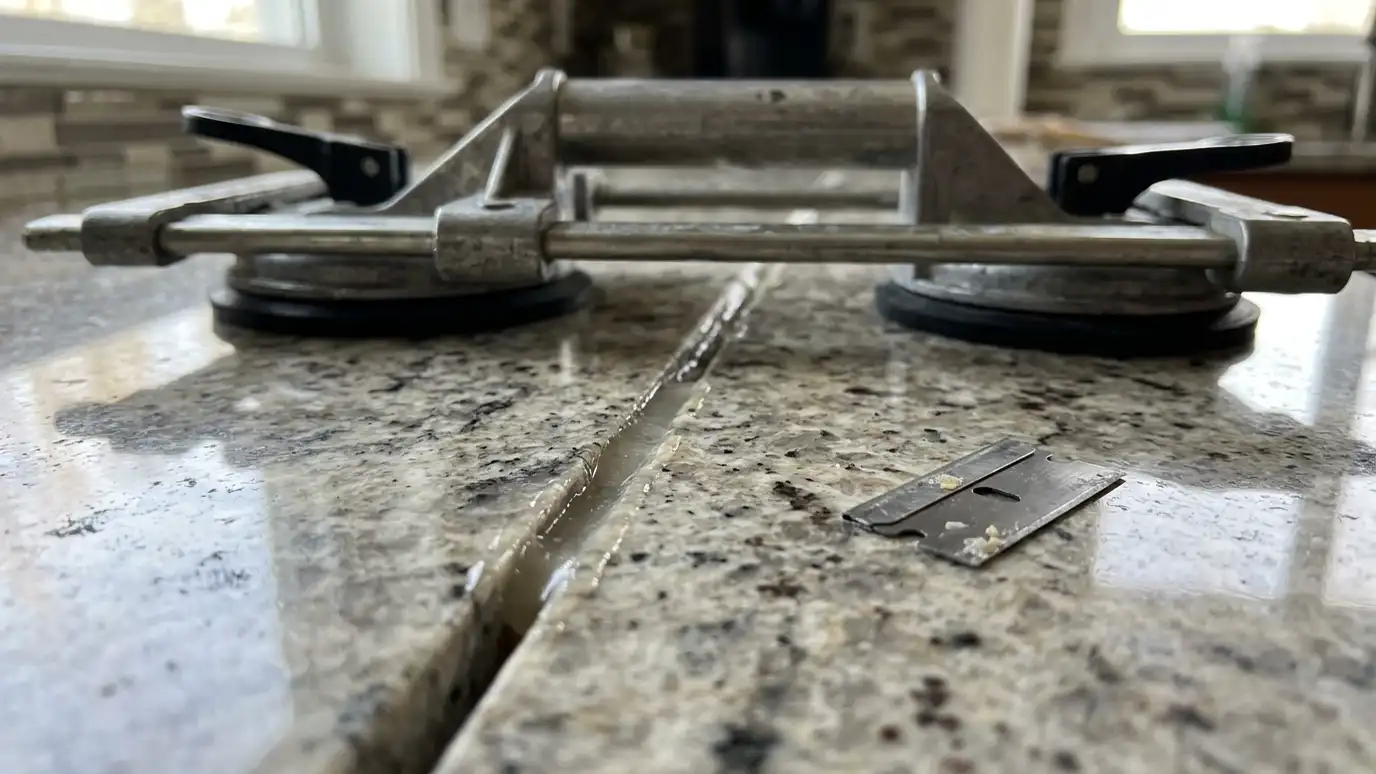
Seams can open if cabinets move or adhesive fails. A raised edge or a dark line suggests it is time for a repair. Rejoining, leveling and polishing usually solves it.
Check the cabinet below for moisture or damage.
Loose or rocking tops
A top that rocks or lifts is not fully supported or secured. It can crack or break. Stop heavy use and call for help.
Reattaching with fresh adhesive and added support is usually straightforward.
Scratches and wear
Granite resists scratches, but grit, ceramics and rough cookware can leave marks. Light scratches can be buffed out. Use cutting boards and avoid dragging heavy items.
A restoration can refresh a tired surface.
Most granite problems are fixable, so call early before small issues grow.