Everyday cleaning
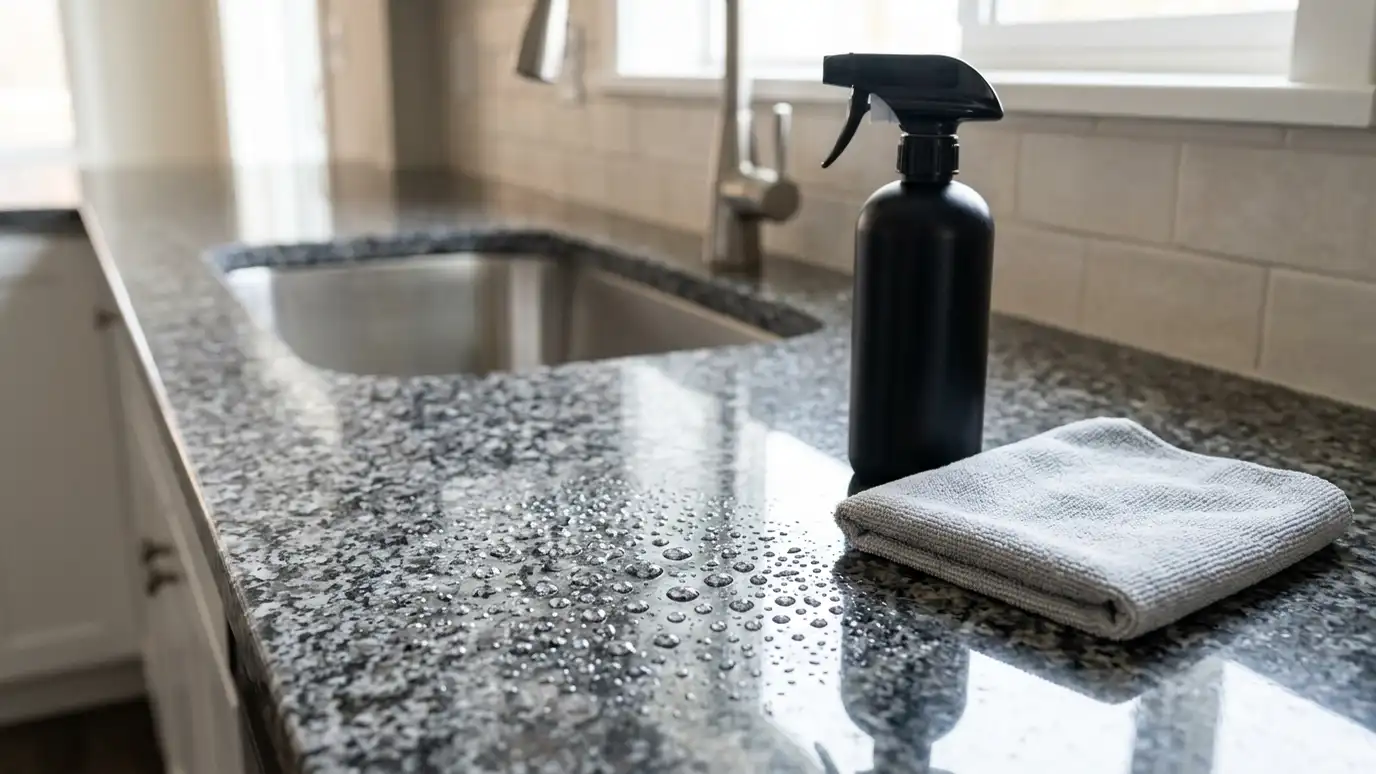
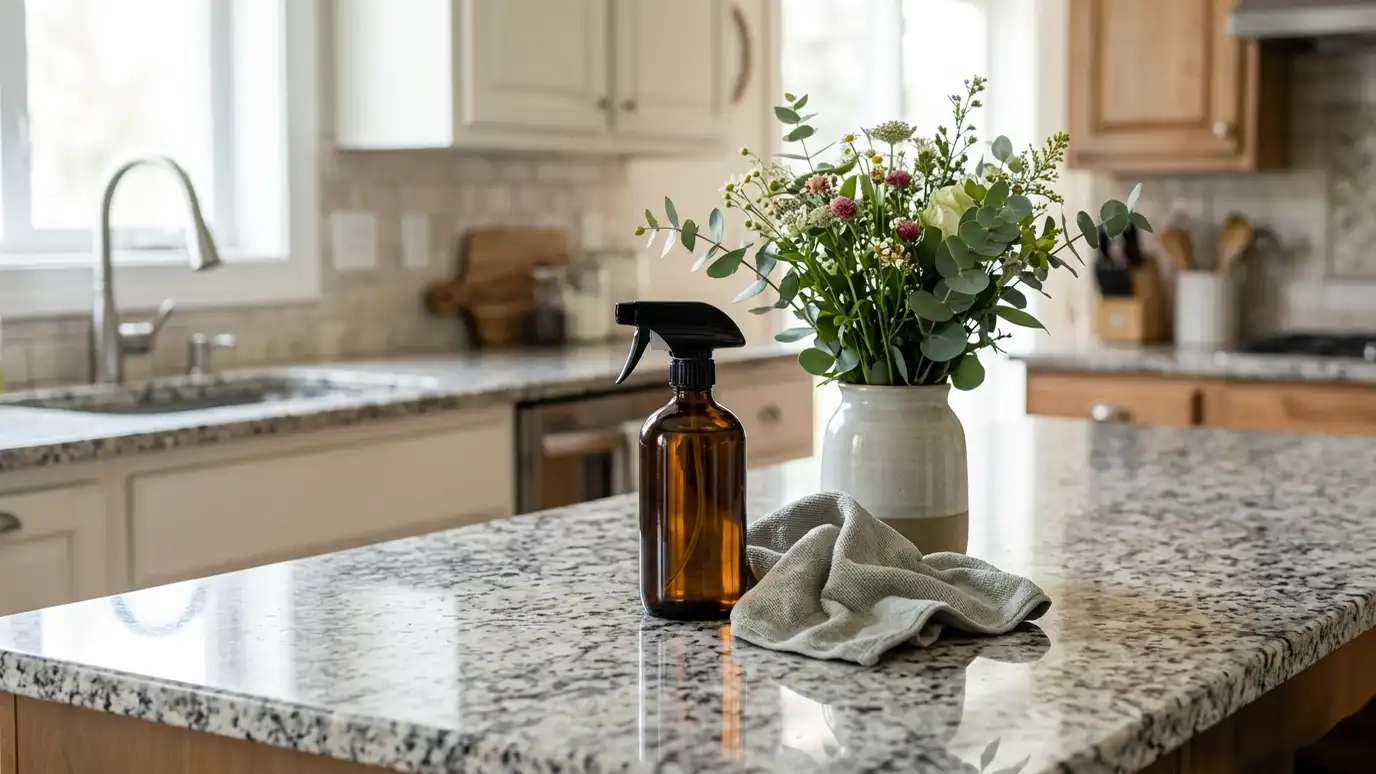
For daily cleaning, use warm water and a few drops of mild dish soap or a pH-neutral stone cleaner. Wipe with a soft cloth or sponge, rinse and dry to avoid streaks. This is all most granite needs.
Clean up spills quickly, especially oil, wine, coffee and juice, to prevent staining.
What to avoid
Avoid vinegar, lemon juice, ammonia, bleach and abrasive powders or scrubbing pads. Acids can dull the surface and break down sealer. Abrasives can scratch the polish. Many all-purpose sprays contain ingredients that are not safe for natural stone.
Read labels, and when in doubt, use mild soap and water.
The water test
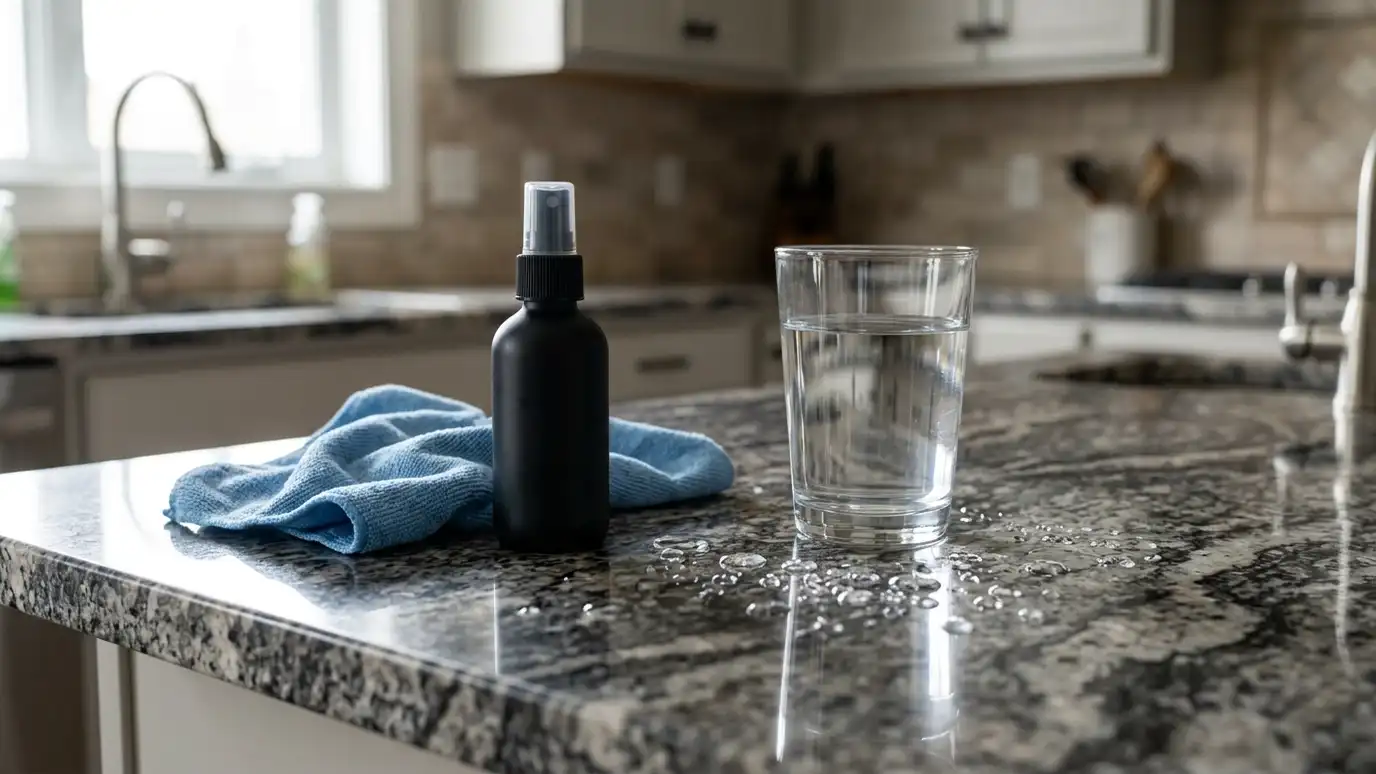
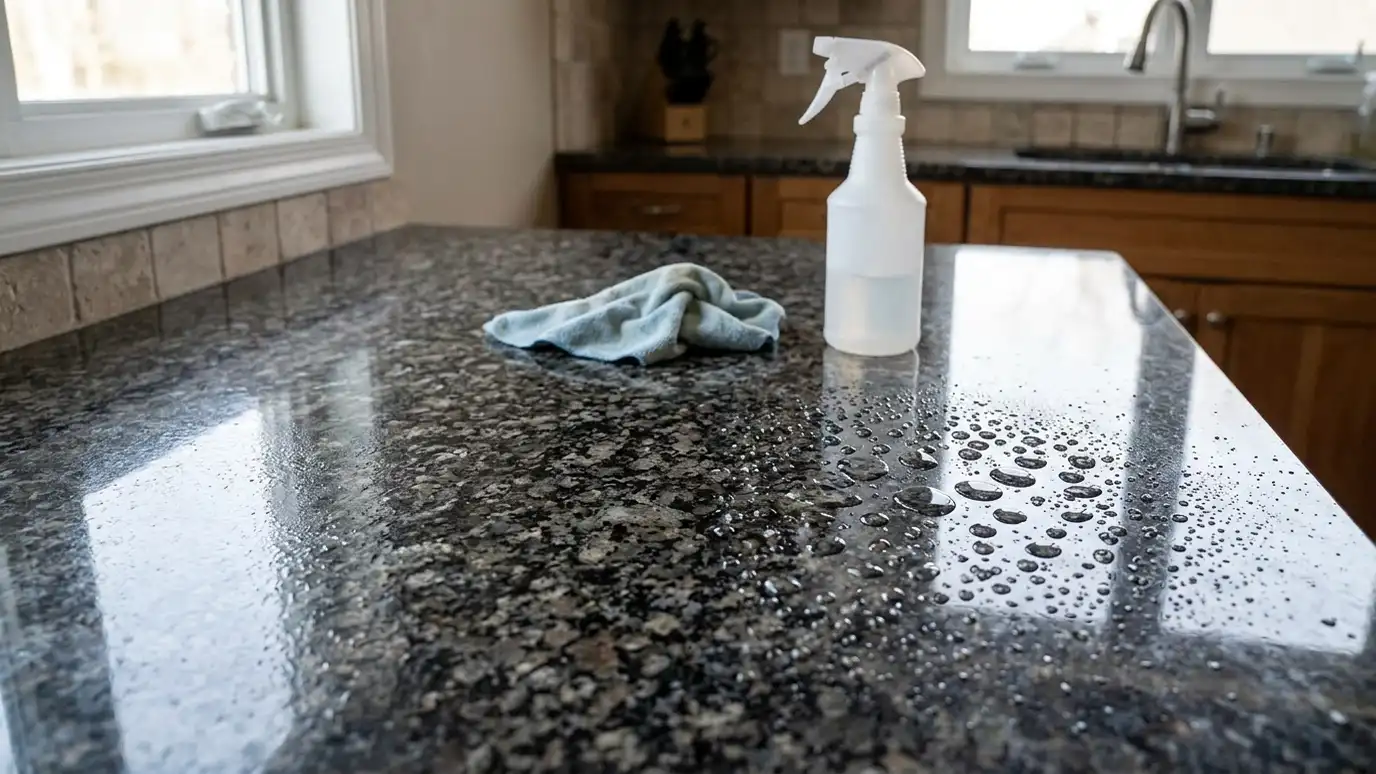
To see whether your sealer is working, drop a few drops of water on the stone and wait ten to fifteen minutes. If the water beads, the seal is good. If it darkens the stone, the sealer has worn off. Test near the sink and the cooktop, where wear is highest.
Repeat the test every few months. It takes one minute.
When and how to reseal
Most granites need resealing every year or two, though dense stones can go longer. Use a penetrating stone sealer, apply it in thin coats, wipe the excess and let it cure. Follow the product directions.
If you prefer, we can reseal your counters as part of a care visit.
Heat, cutting and daily habits
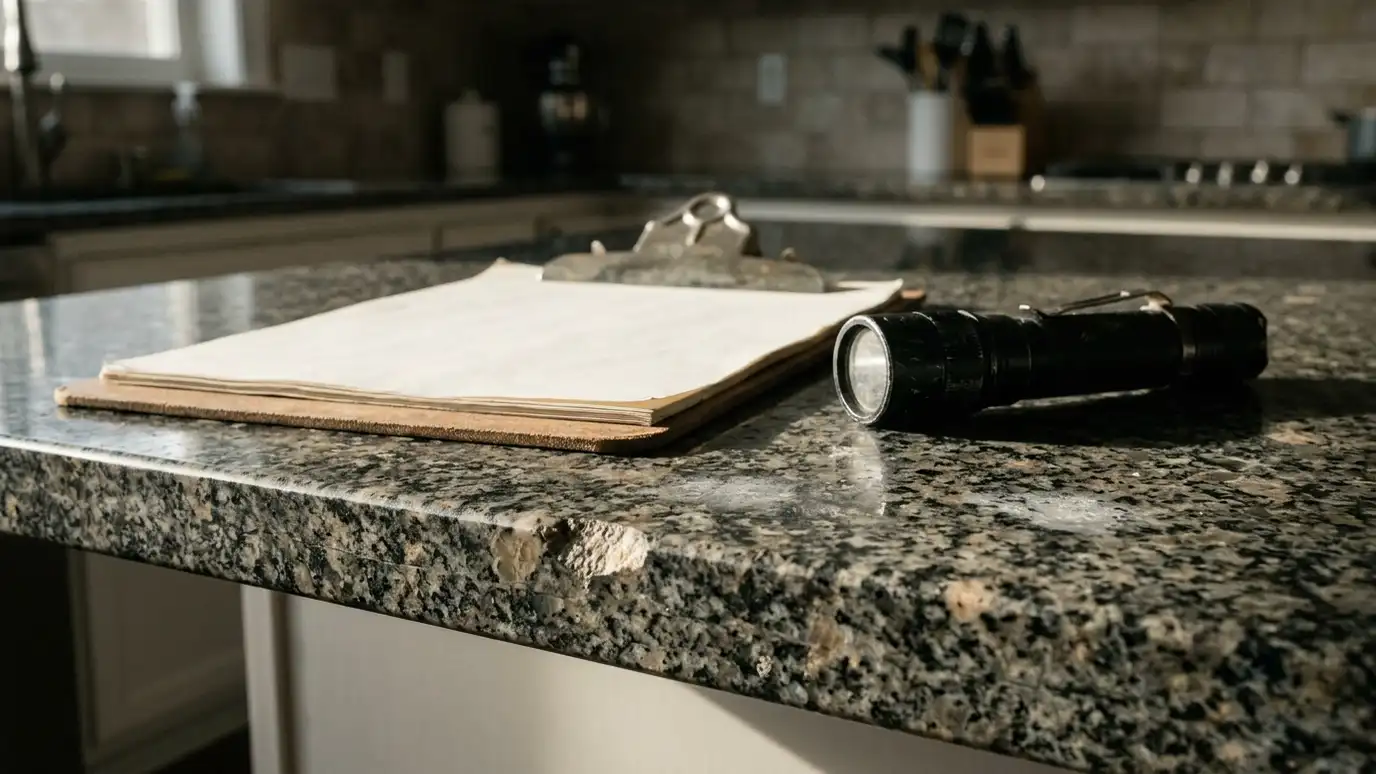
Granite tolerates heat well, but a trivet is a good habit. Avoid cutting directly on the stone, since it dulls knives and can scratch. Use coasters under glasses with acidic drinks. Do not sit or stand on overhangs, which can crack.
Use a cutting board and a mat near the sink for the best protection.
Stains and spills
If a spill sits, blot, do not wipe, to avoid spreading. Wash with mild soap and water. For oil stains, a paste of baking soda and water left under plastic wrap for a day can help. For stubborn or old stains, a professional poultice works better.
See our stain guide for details on specific stains.
A simple schedule
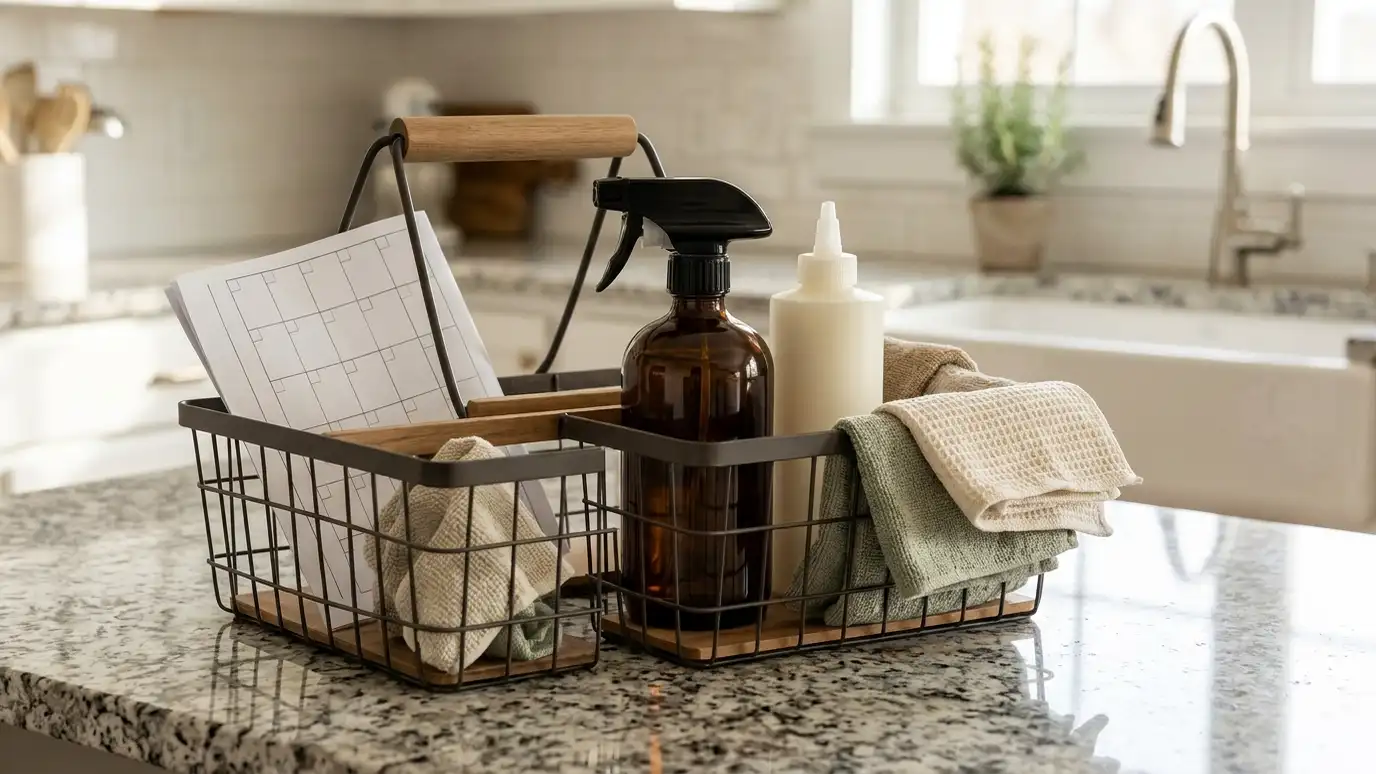
Daily: wipe with mild soap and water. Weekly: a clean with stone cleaner. Every few months: water test. Every year or two: reseal as needed. Once in a while: a deep clean or professional polish.
A little routine goes a long way.
Use mild soap, avoid acids, do the water test and reseal when it fails.