Why granite stains
Granite looks solid, but it has microscopic pores. If the sealer has worn, liquids can soak into those pores and leave a stain. Stains are not damage to the stone itself. They are material sitting in the pores, which is why they can often be drawn out.
Identifying the type of stain is the first step, because each needs a different approach.
Oil-based stains
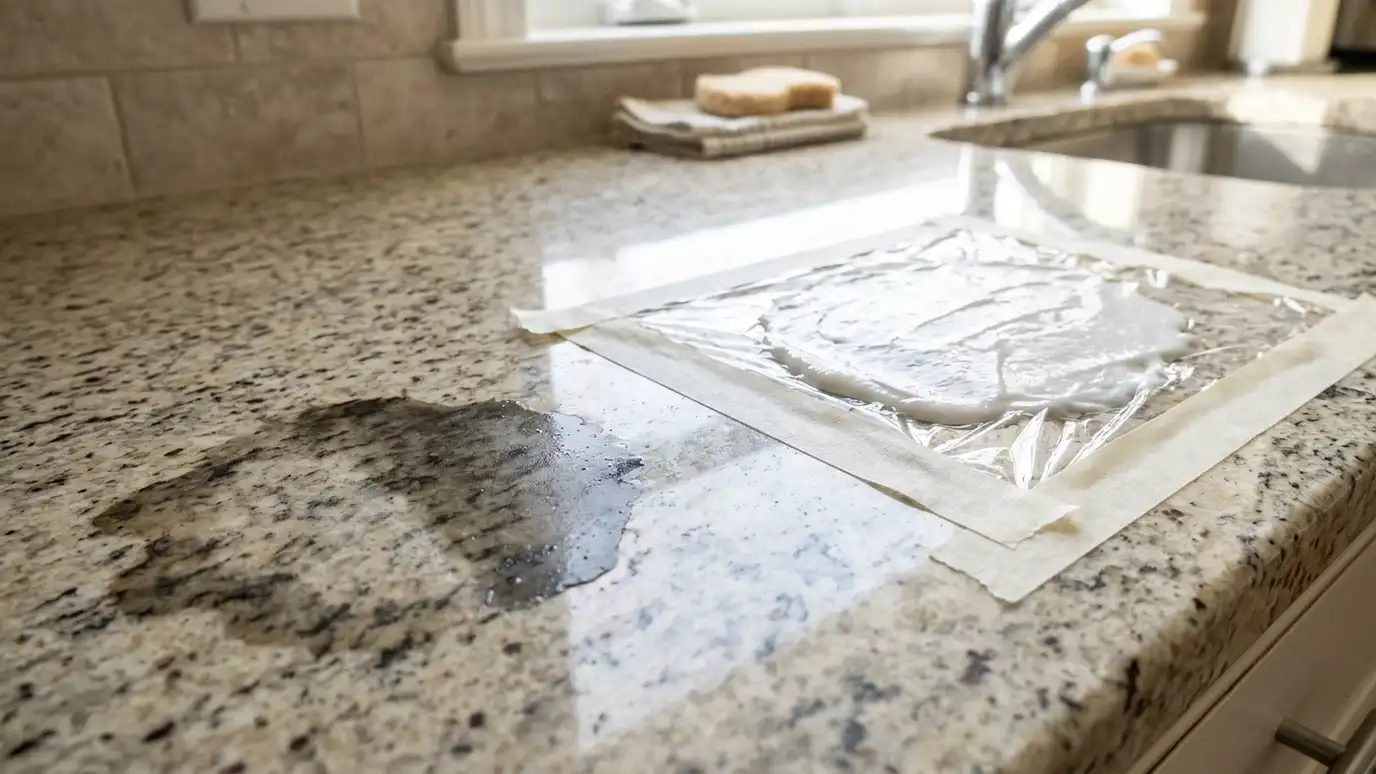
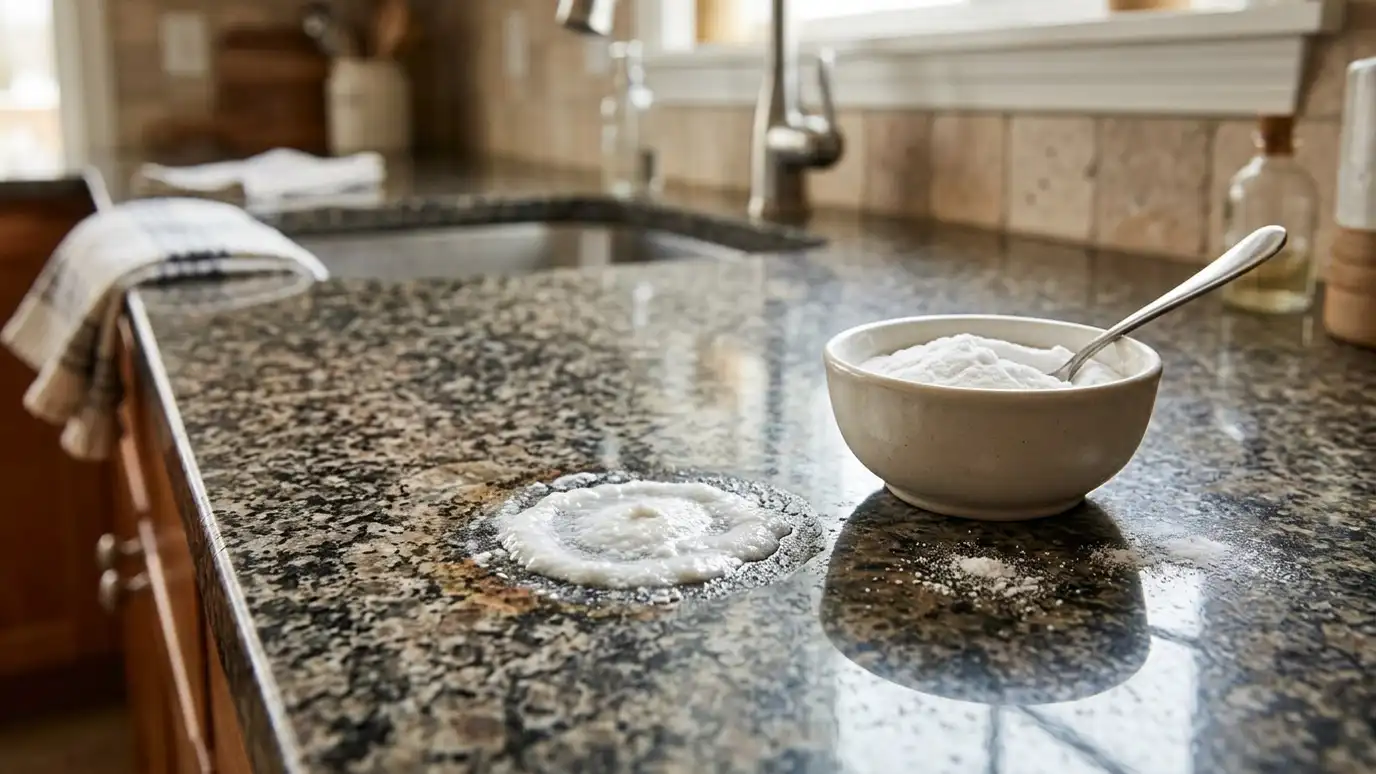
Cooking oil, butter, lotion and grease leave dark patches that spread slowly. To treat them, mix a poultice of baking soda and water, or a stone-safe degreasing solvent with an absorbent powder, spread it over the stain and cover with plastic wrap. Leave for twenty-four hours, then remove and rinse.
Repeat if needed. Oil stains can take more than one try.
Organic stains
Coffee, tea, wine, juice and food can leave pink, brown or tan marks. A poultice with a mild hydrogen peroxide solution and baking soda often lifts them. Apply, cover and wait, then rinse. Avoid using stronger chemicals unless a professional advises.
Light organic stains often fade on their own as the stone dries.
Rust and metal stains
Orange or brown marks from cans, pots or metal items are rust stains. These need a specific rust remover for stone, because standard cleaners can make them worse. Apply carefully, follow directions and rinse well.
Rust stains on light stone can be stubborn. A professional treatment may be best.
Water rings and dark spots
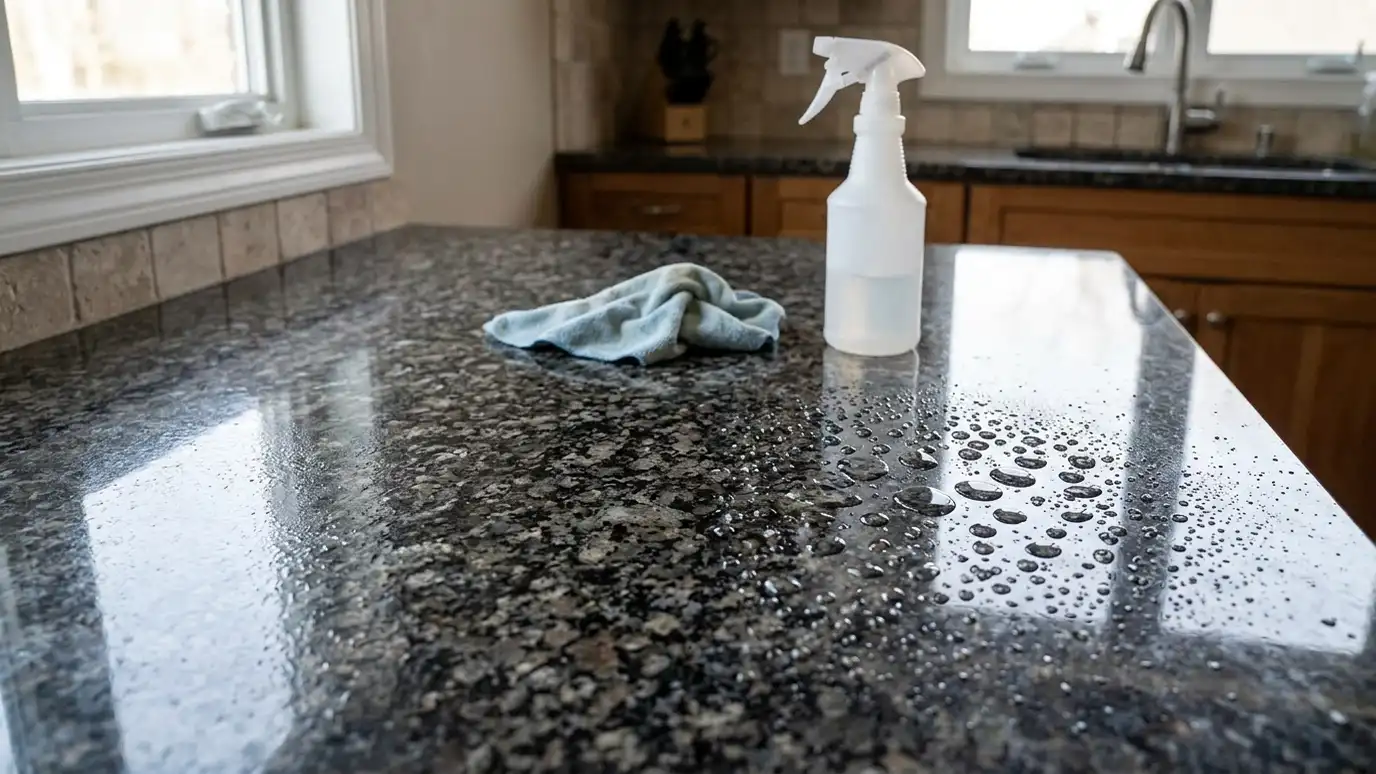
Dark spots that appear and dry out are often moisture in the stone and are not a stain. Wipe, let the area dry and see if it fades. Cloudy rings that remain may be an etch from acid, which needs polishing, not a poultice.
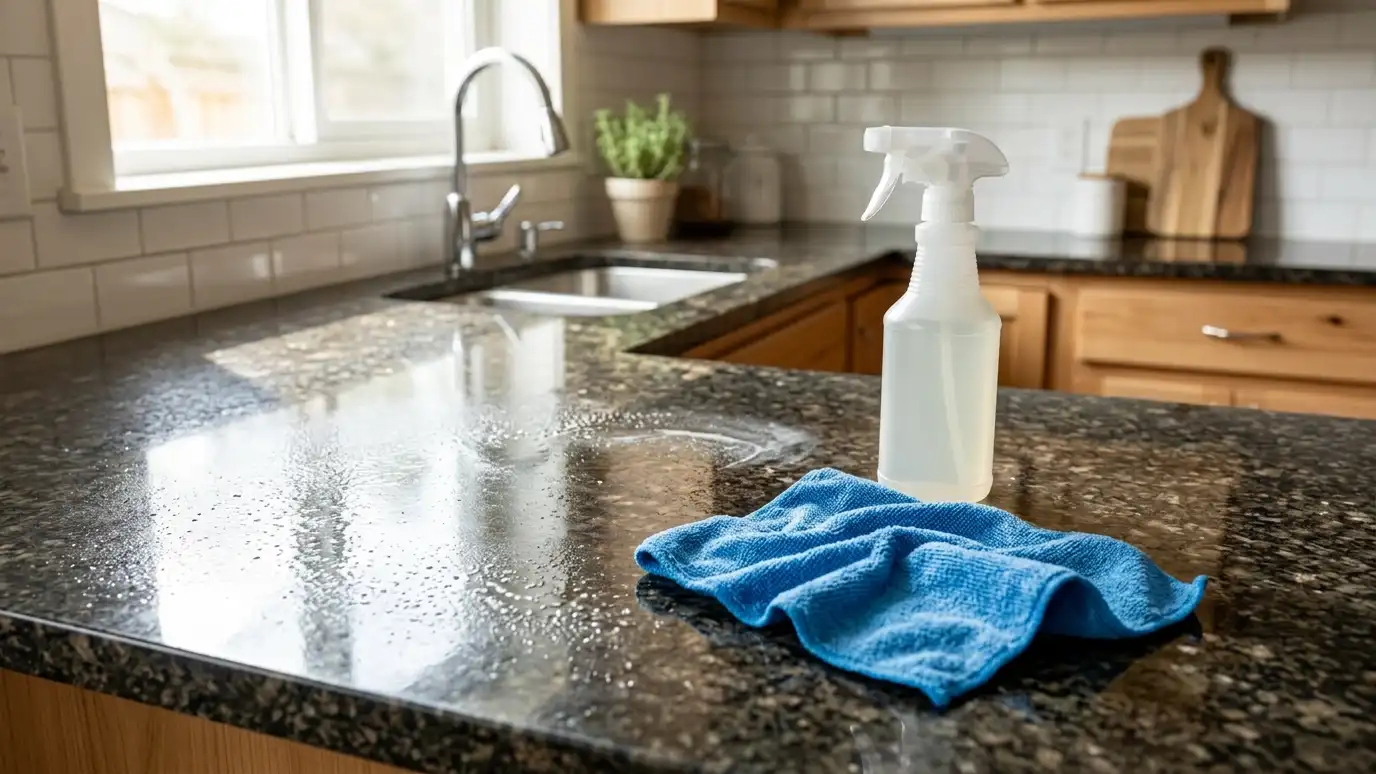
Deep dark patches near the sink can signal that the sealer has failed.
Prevention
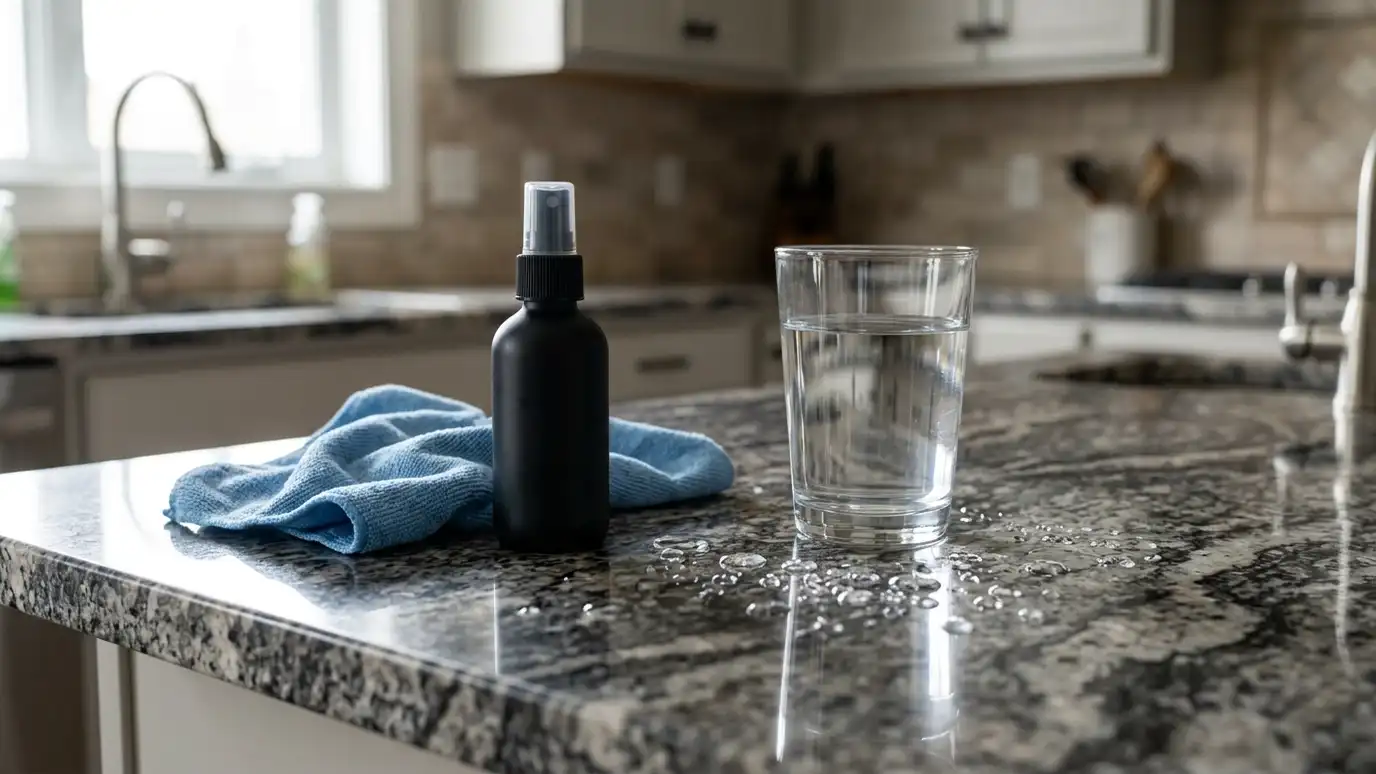
Seal granite regularly and wipe spills quickly. Use coasters, trays under oils and mats near the sink. Avoid leaving wet sponges or wet cloths on the counter. Test the seal every few months.
Prevention is much easier than removal.
When to call a professional
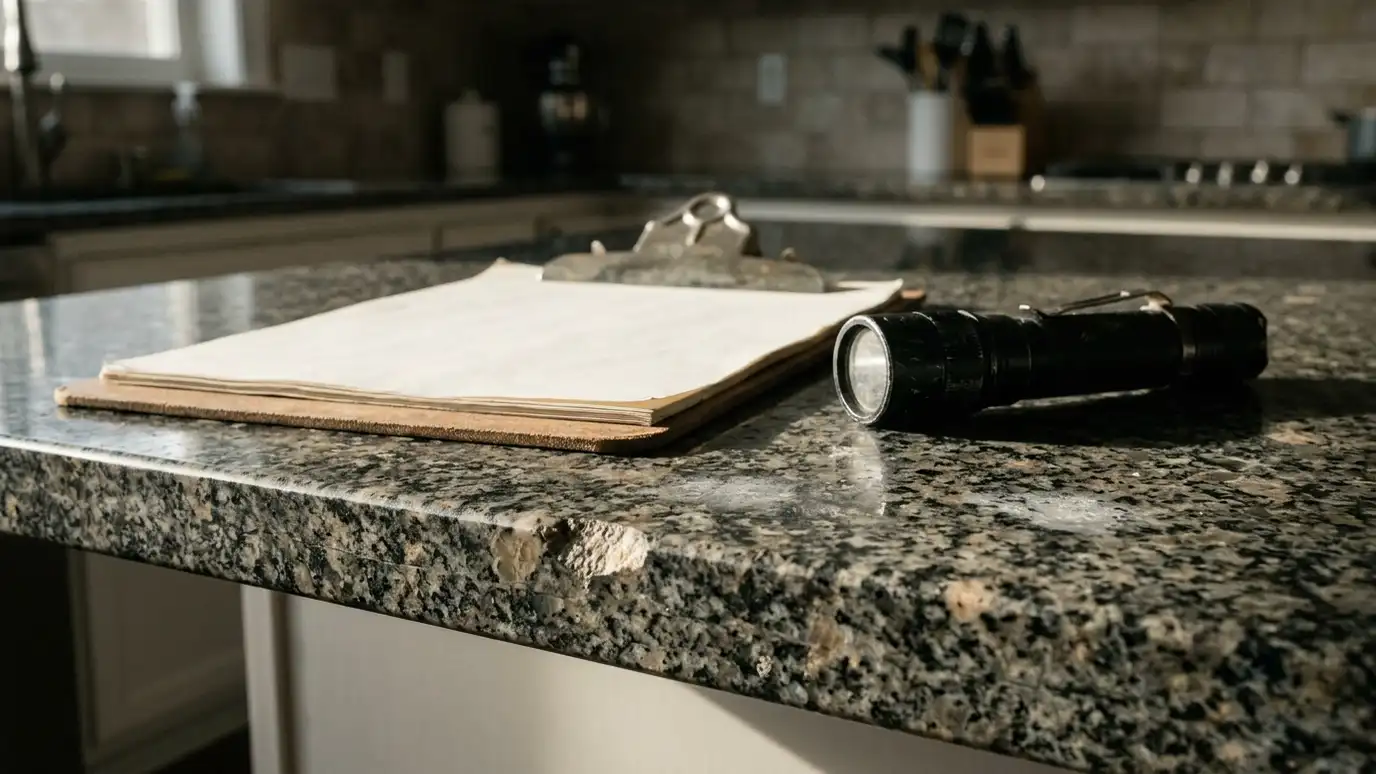
If a stain is large, old, deep or unknown, or if it returns after treatment, call a stone professional. They can test the stain, use stronger poultices and polish and reseal afterward.
Trying harsh chemicals can set a stain or damage the stone.
Identify the stain first, use a poultice instead of scrubbing and reseal afterward.